Case study / excavation and ISRU
PERDEX: tested hardware for volatile-aware excavation
Lunar ice is only useful if an excavation system can recover icy regolith without needlessly heating, dispersing, or losing the resource. PERDEX turned that systems problem into built hardware and a completed test campaign.
Discuss excavation or ISRU integration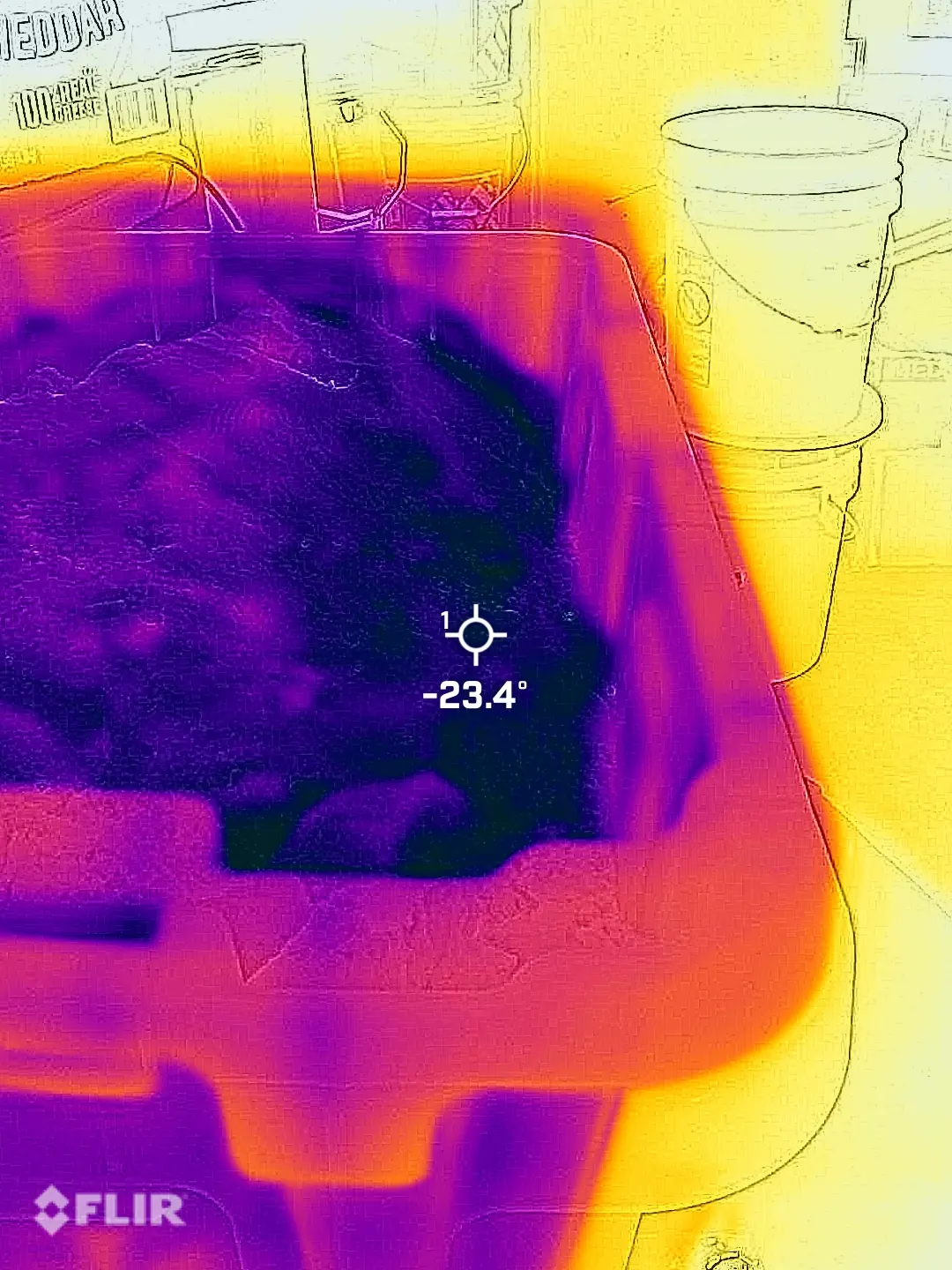
The problem
Excavation can destroy part of the resource it is trying to collect.
Digging icy lunar regolith is not simply a question of moving mass. Cutting, friction, exposed surface area, transfer time, and vacuum all influence how much water remains available for processing. Cislune’s PERDEX work treated excavation and volatile preservation as one connected problem.
The program combined mechanism development, icy-regolith analog work, thermal modeling, controls, and relevant-environment testing. The goal was practical: create evidence that can guide a future excavation payload and the test campaign around it.
What Cislune demonstrated
A complete development chain, not a paper mechanism.
Hardware progression
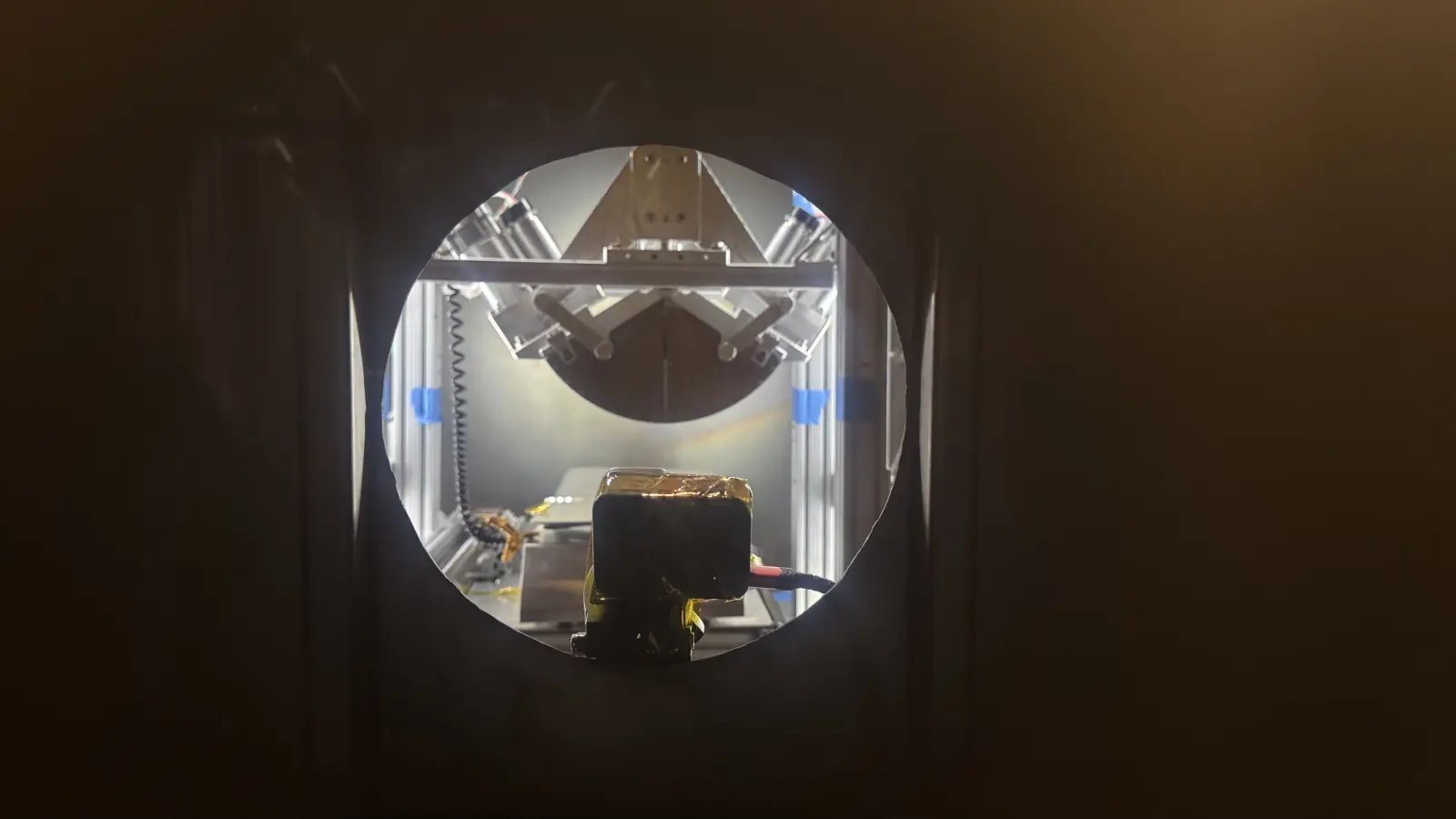
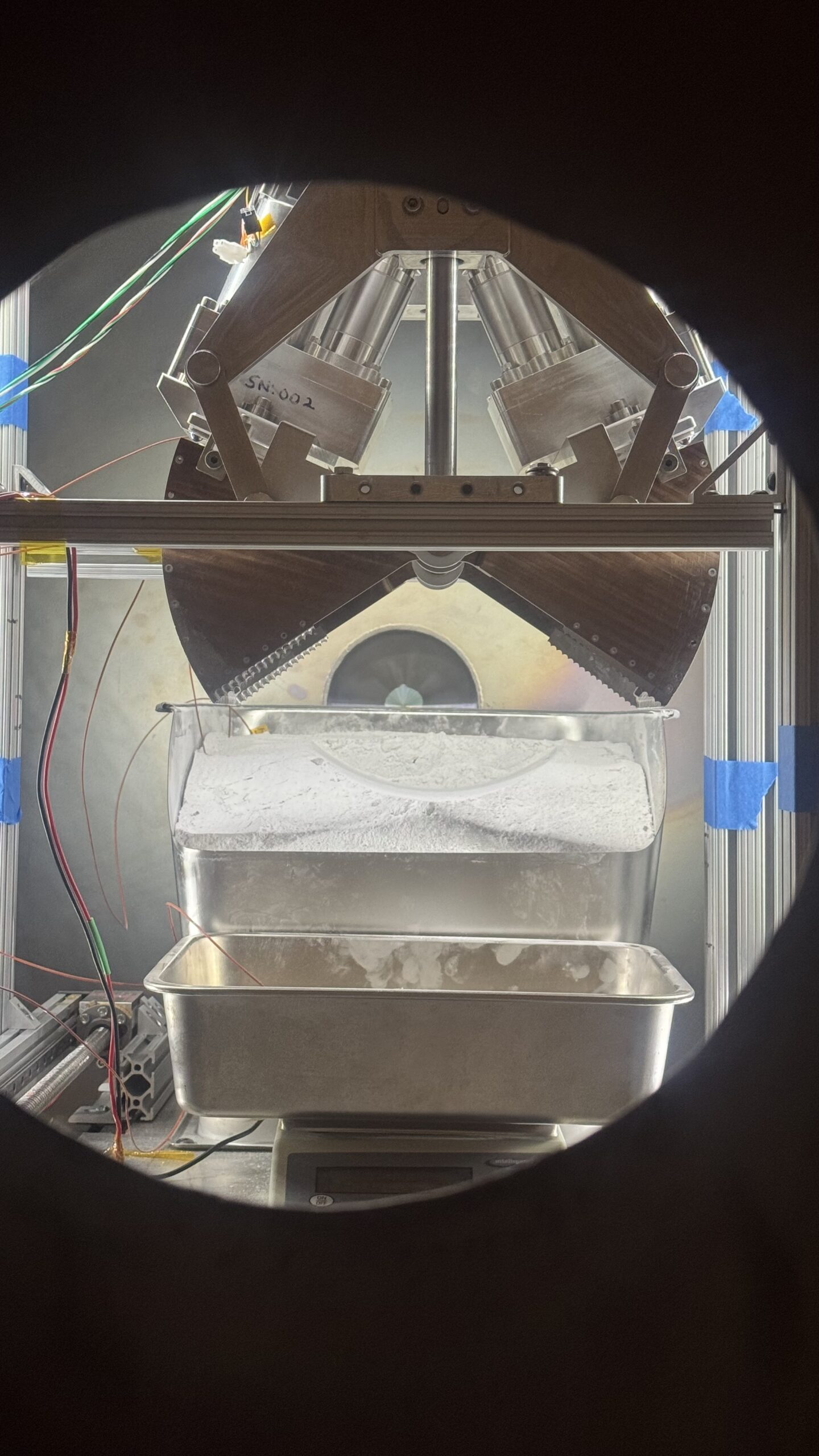
The team moved from architecture and test articles into an integrated excavation system built for material-interaction testing.
Representative materials
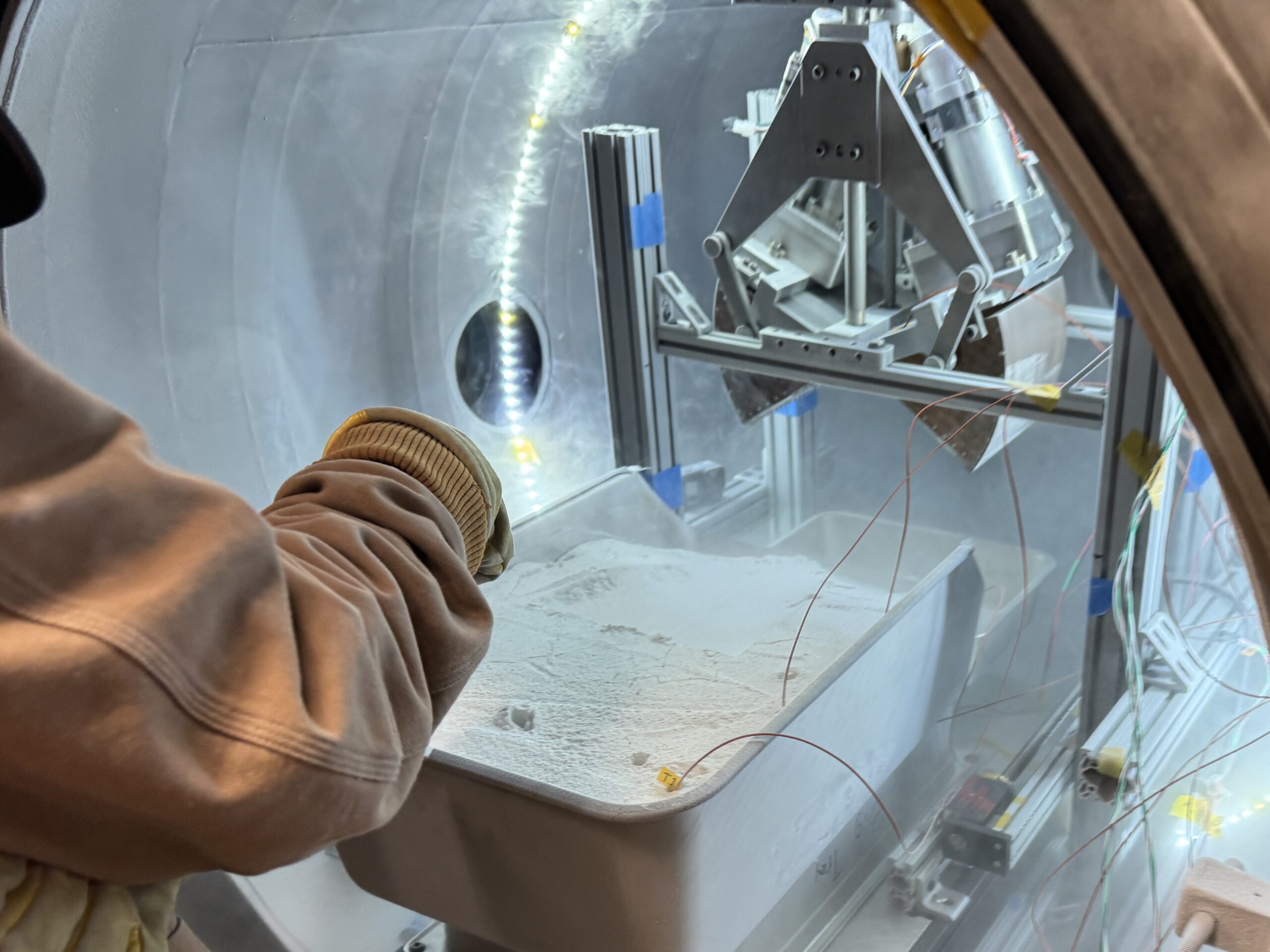
Testing included consolidated targets and icy-regolith analogs so the mechanism could be evaluated against more than loose, room-temperature soil.
Relevant environments
The campaign advanced through ambient work, vacuum testing, and cold thermal-vacuum operation, producing evidence for the next design and integration cycle.
Why it matters
The next conversation can start with a payload, test need, or processing interface.
PERDEX gives agency and commercial teams a tested foundation for questions about icy-regolith acquisition, excavation-to-processing handoff, representative simulants, and relevant-environment verification.
A technical exchange can start with the target material, environment, desired throughput, payload interface, and evidence needed for the next decision.
Build the next test
Bring the mission constraint. Cislune can help shape the hardware and evidence plan.
Useful starting points include excavation payload integration, icy-regolith test campaigns, volatile-aware material handling, mechanism trade studies, and Phase III or commercial maturation.
Start a PERDEX conversation